Fix
Sage Barista Express problems and fixes
Published
Note: This page contains affiliate links. If you buy through them we may earn a commission at no extra cost to you. Learn more
In short
Most Sage Barista Express problems come down to grind size, dose, scale or a part that needs cleaning. Sour, fast shots mean grind finer; bitter, slow shots mean grind coarser. No water usually points to a seating problem, an air lock or scale, and a flashing light normally asks for a clean or descale cycle. Check the symptom table below, then follow Sage's manual for your exact model.
Products for this job
Compare all 8 productsOracle Jet: automated grind, dose, tamp and milk
Check price on AmazonAffiliate linkBambino Plus: ThermoJet, auto milk, no grinder
Check price on AmazonAffiliate linkBarista Express Impress: assisted tamping
Check price on AmazonAffiliate link
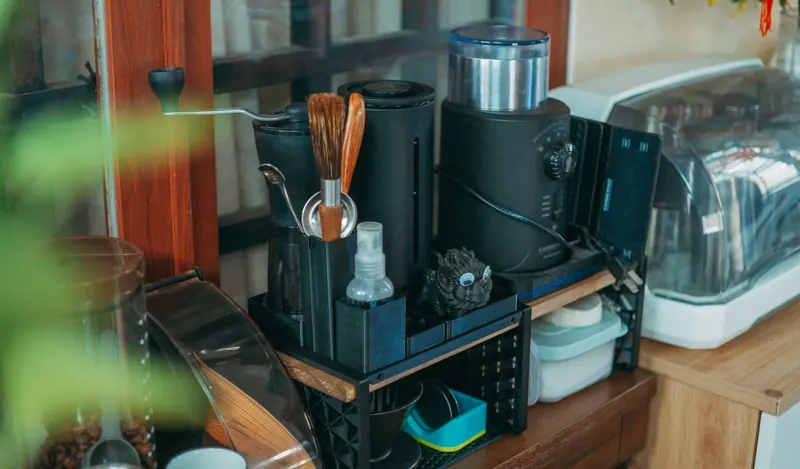
The Sage Barista Express is one of the most popular home espresso machines in the UK, and most of the faults owners run into are fixable at home. It combines a conical burr grinder, a 54 mm portafilter, a steam wand and a pressure gauge, so a problem in one part often shows up somewhere else. This guide starts with a quick symptom table, then explains each fault in more detail. Procedures differ a little between the original Express and the Express Impress, so treat your manual as the final word.
Symptom table: quick fixes
Find the closest match, try the quick fix, then read the section below for more detail. Always change one thing at a time so you know what made the difference.
| Symptom | Likely cause | First fix |
|---|---|---|
| Sour, thin, fast shot | Grind too coarse or dose too low | Grind finer, check dose fills the basket |
| Bitter, slow, dripping shot | Grind too fine or too much coffee | Grind coarser or reduce grind amount |
| Gauge stays low | Coarse grind, low dose, dual-wall basket mix up | See our no pressure guide |
| No water from group or wand | Tank not seated, air lock, scale | Reseat tank, prime, descale |
| Grinder hums or will not grind | Hopper not locked, jammed burrs | Relock hopper, clean burrs |
| Clean me light on | Cleaning cycle due | Run the cleaning cycle with a tablet |
| Water leaking round portafilter | Worn group gasket or grounds on rim | Wipe rim, replace gasket if hard |
Sour, bitter or inconsistent shots
Taste and shot time are your best guides. Sage suggests aiming for the espresso range on the gauge and a double shot running in roughly 25 to 30 seconds, though your manual gives the exact targets. If the shot gushes and tastes sharp, grind finer by a couple of steps. If it drips and tastes harsh or ashy, go coarser.
Fresh beans matter too. Beans roasted many months ago struggle to build pressure however fine you grind. Our guide to Sage Barista Express grind settings covers dialling in, and espresso dose and ratio explains how much coffee to use.
Low or no pressure
A gauge that barely moves is usually caused by coffee rather than the machine. Common reasons are a coarse grind, too little coffee in the basket, weak tamping, or using the single-wall basket with pre-ground coffee that is too coarse. The dual-wall (pressurised) baskets give a pressure reading even with coarse coffee, so switching between basket types changes what the gauge shows. Our guide to Sage Barista Express no pressure walks through each check in order.
No water, grinder faults and lights
If no water comes from the group head or steam wand, first check that the tank is full and pushed fully home, as the valve underneath only opens when it is seated. Air locks can follow an empty tank, and scale can block the flow over time. See no water coming out for a priming routine.
A grinder that hums without grinding or stops suddenly often has a hopper that is not locked or a stone or oily clump caught in the burrs. The grinder not working guide covers the clean out.
On many versions the Clean Me light comes on after a set number of shots and asks you to run the cleaning cycle with a cleaning tablet. A descale reminder or flashing lights during descale mode follow the steps in the manual. For routines, see how to clean the Sage Barista Express and how to descale the Sage Barista Express.
Note:Unplug the machine before removing the hopper or burrs, and let it cool before touching the group head or steam wand.
When to contact Sage
Stop and contact Sage support or an authorised repairer if the machine trips your electrics, smells of burning, leaks from underneath the body, makes loud grinding noises from the pump, or will not heat at all. These faults involve internal parts and mains voltage, which are not safe to open at home and may affect your warranty.
If you are weighing up a repair against a new machine, our Sage espresso machines compared guide sets out the current range, and best espresso machines with a grinder covers alternatives.
Frequently asked questions
Why does my Sage Barista Express taste sour? The shot is usually under-extracted, meaning water ran through too quickly. Grind finer, make sure the basket is filled to the right level and tamp firmly and level.
What does the Clean Me light mean? It is a reminder to run the cleaning cycle with a cleaning tablet in the single-wall basket and the cleaning disc fitted. The exact steps are in your manual and the light should go out once the cycle completes.
What size portafilter does the Sage Barista Express use? It uses a 54 mm portafilter and baskets. Our portafilter sizes by machine guide lists other models.
Are the Barista Express and Express Impress problems the same? Most are, since both use similar grinders and heating. The Impress adds an assisted tamping system, so dose and tamp problems show up differently. Follow the manual for your model.
What you need
- Check price on AmazonAffiliate link
Sage Oracle Jet: auto grind, dose, tamp and milk
From: Sage espresso machines compared: Bambino Plus to Oracle
- Check price on AmazonAffiliate link
Sage Barista Express Impress: guided dosing and tamping
- Check price on AmazonAffiliate link
Ninja Luxe Premier: assisted tamper, scale and auto froth