Topic
Choosing a machine
Bean-to-cup, manual espresso or pods: the main types differ in how much you do yourself, how much space they take and what they ask of you each week. Start with how you drink coffee, then pick the type.
- Pump pressure on listings
- 15 to 20 bar
- Pressure at the puck
- about 9 bar
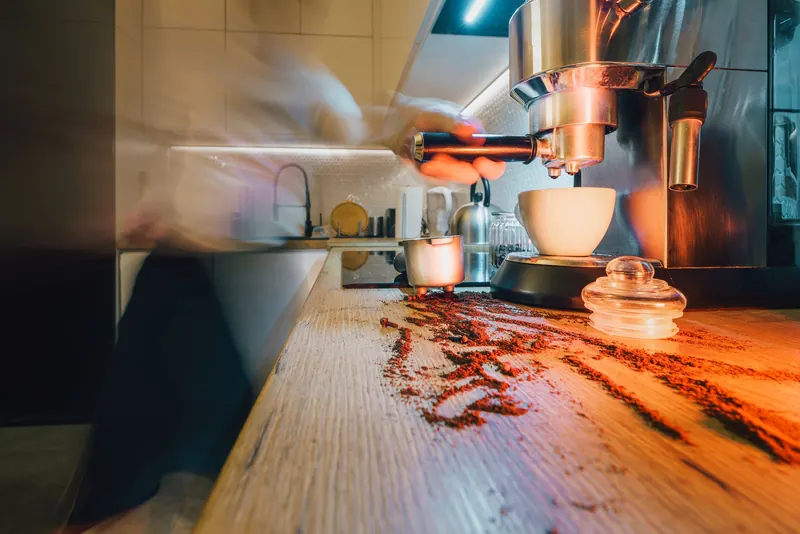
A bean-to-cup machine grinds, doses, tamps and brews at a touch, and many add an automatic milk system. A manual espresso machine leaves the grinding, dosing and tamping to you, which takes practice but gives more control. Pod machines are the simplest of all but tie you to one capsule system.
The pressure on the box (15, 19 or 20 bar) is the pump's maximum, not the pressure in the cup. Espresso is usually brewed at around 9 bar, so a higher number on its own is not a sign of better coffee.
Measure the space under your wall cupboards before you shortlist: height with the lid or bean hopper open matters as much as the footprint. Our water-hardness converter helps you set any machine up for your area.
Common mistakes
- Choosing on the bar figure alone.
- Forgetting the height needed to refill the bean hopper or water tank under a cupboard.
Guides on this topic
- Why are bean-to-cup coffee machines so expensiveWhy bean-to-cup coffee machines cost so much: the grinder, brew unit, heating, milk system and electronics explained, plus where you can save without regret.Guide
- Which coffee machine should I buyA short decision path for choosing a home coffee machine by the drinks you make, your time each morning, worktop space and how much you enjoy tinkering.Guide
- What is a bean-to-cup coffee machine and is it worth itHow a bean-to-cup coffee machine grinds, brews and froths milk on its own, the daily upkeep it needs, and who gets the most value from owning one.Guide
- Is an espresso machine worth itIs an espresso machine worth it? Weigh up skill, time, kit and cost per cup to judge whether a manual espresso machine suits your coffee habits at home.Guide
- How long do coffee machines lastHow long bean-to-cup, espresso, pod and filter coffee machines usually last, which parts wear out first, and the simple habits that keep a machine going for years.Guide
- How does an espresso machine work: boilers, thermoblocks and pumpsHow espresso machines work: pump pressure in bar, and what single boiler, heat exchanger, dual boiler and thermoblock heating mean for your coffee.Guide
- Espresso machine vs filter coffee makerEspresso machine vs filter coffee maker: how each brews, strength, volume, milk drinks, effort and cleaning, so you can pick the right one for your mornings.Comparison
- Coffee machine vs instant coffee: is it worth switchingCoffee machine vs instant coffee compared on taste, caffeine, time, space, cleaning and cost per cup, so you can decide if switching from a jar makes sense.Comparison
- Coffee machine power consumption: watts and kWh explainedHow much electricity does a coffee machine use? Rated watts vs real kWh per cup and per day, standby and eco modes, and a simple method to work out your own costs.Guide
- Coffee machine dimensions: will it fit under your cupboardsHow big is a coffee machine? Typical widths, depths and heights of bean-to-cup and espresso machines from listings, plus clearance for hoppers and tanks.Guide
- Bean-to-cup vs pod coffee machinesBean-to-cup vs pod coffee machines like Nespresso: taste, choice of coffee, waste, cleaning and running effort compared, so you can choose with confidence.Comparison
- Bean-to-cup vs espresso machine: which suits youBean-to-cup vs espresso machine: convenience against control, compared on time per drink, cup quality, cleaning and the learning curve of each type.Comparison