Guide
What is a bean-to-cup coffee machine and is it worth it
Published
Note: This page contains affiliate links. If you buy through them we may earn a commission at no extra cost to you. Learn more
In short
A bean-to-cup coffee machine grinds whole beans, tamps and brews each shot, and on many models froths milk, all at the press of a button. It is worth it if you drink espresso based coffee every day and want consistent drinks with little effort. It suits households less well if you want full control of each shot or are not willing to clean it daily.
Products for this job
Compare all 7 productsPhilips 5500 LatteGo: 20 hot and iced drinks
Check price on AmazonAffiliate linkDe'Longhi Magnifica Evo Next: 13 drinks, 3 profiles
Check price on AmazonAffiliate linkSiemens EQ700: 5" touch display and app control
Check price on AmazonAffiliate link
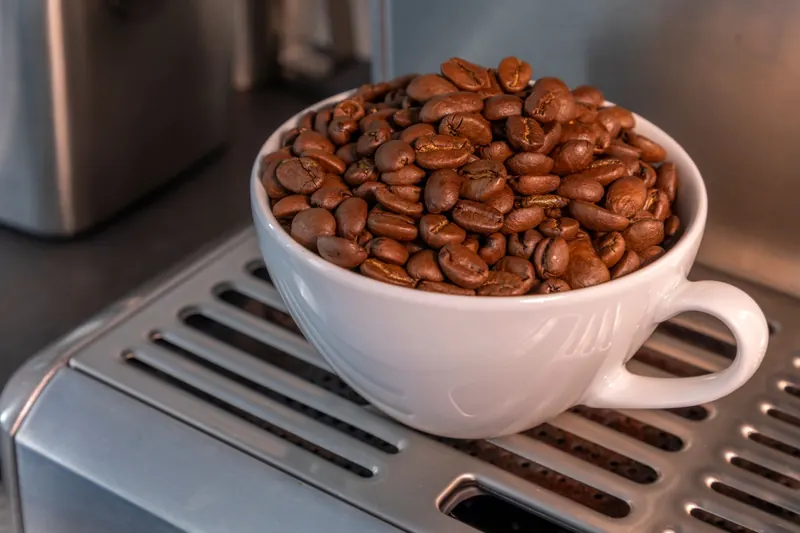
Bean-to-cup machines, also called fully automatic or super automatic machines, take the skill out of espresso. You fill the hopper with beans and the tank with water, choose a drink, and the machine does the rest. They have become one of the most popular choices for UK kitchens because they sit between the ease of a pod machine and the fresh flavour of ground beans. Here is how they work, what they need from you, and who they suit best.
How a bean-to-cup machine works
Inside, several parts work in sequence. Beans drop from the hopper into a burr grinder, which grinds a measured dose. The grounds fall through a chute into the brew unit, a removable chamber with a piston that compresses the coffee into a puck. A pump pushes hot water from a thermoblock heater through the puck at pressure, and the espresso runs out of the spout. The brew unit then ejects the used puck into the grounds bin.
Milk systems vary. Some machines have a steam wand you use by hand. Others draw milk from a carafe or a jug through a tube and froth it automatically. That is what makes one touch lattes and cappuccinos possible.
- Water path
- Coffee path
- Used puck to the bin
- Bean hopper and burr grinder: grinds fresh for each drink
- Brew unit: compresses the coffee and brews the shot
- Thermoblock: heats water quickly on demand
- Pump: pushes water through the coffee under pressure
- Milk system: steam wand or automatic carafe
- Grounds bin and drip tray: collect used pucks and waste water
What you get in the cup
Because beans are ground fresh, the coffee tastes fresher than from pods or pre-ground coffee. Results are consistent day to day. Most machines let you adjust strength, cup size, temperature and grind fineness, and many store profiles for different people.
The trade off is control. A bean-to-cup cannot be fine tuned shot by shot as a manual espresso machine can, and the doses are smaller than a café double, so espresso can taste lighter. Many people find a stronger setting and a medium roast bean give the best results.
Daily and weekly upkeep
Bean-to-cup machines automate brewing, not cleaning. Expect a few minutes of care each day and a little more each week. Skipping it is the main reason these machines develop faults.
| Task | How often |
|---|---|
| Empty grounds bin and drip tray | Daily or when prompted |
| Rinse or clean milk system | After each milk drink |
| Wash milk carafe parts | Daily with daily use |
| Rinse brew unit if removable | Weekly, as the manual says |
| Descale | When prompted, more often in hard water |
| Replace water filter | As the manual advises |
Note:Follow your manual for cleaning products. Many makers say not to wash the brew unit with detergent or put it in a dishwasher.
Who gets the most from one
A bean-to-cup suits people who drink two or more espresso based drinks a day, households with several coffee drinkers, and anyone who wants café style milk drinks without learning barista skills. It also suits small offices. If you drink one black coffee a day, a filter machine or cafetière is simpler. If you love tweaking every shot, a manual espresso machine is more satisfying.
If you are ready to choose, our best bean-to-cup coffee machines guide is the place to start. For one touch milk drinks see bean-to-cup machines with automatic milk, and for tight spaces see small bean-to-cup machines.
Is it worth it?
If you regularly buy coffee out, a bean-to-cup can work out cheaper per cup over time. Use our cost per cup calculator to see your own numbers, and allow for beans, milk, descaler and filters. It also saves time compared with a manual machine. Against that, these machines have more moving parts than a simple espresso machine, so regular care matters. For a side by side look, read bean-to-cup vs espresso machine and our general guide to which coffee machine you should buy.
Frequently asked questions
What is the difference between bean-to-cup and espresso machines? A bean-to-cup does every step automatically. A manual espresso machine needs you to grind, dose, tamp and steam milk, which takes skill but gives more control.
Can you use pre-ground coffee in a bean-to-cup? Many models have a separate funnel for a single dose of pre-ground coffee, such as decaf. Never put ground coffee in the bean hopper.
Do bean-to-cup machines make proper espresso? They brew under pressure and produce crema, so yes. Shots are usually lighter than a café double because doses are smaller.
How long does a bean-to-cup machine last? With regular cleaning and descaling, many last for years. See how long do coffee machines last.
What you need
- Check price on AmazonAffiliate link
Philips 5500 LatteGo: 20 hot and iced drinks
- Check price on AmazonAffiliate link
De'Longhi Magnifica Plus: LatteCrema Hot, 18 drinks
From: Best bean-to-cup machines with automatic milk for lattes and cappuccinos
- Check price on AmazonAffiliate link
Melitta SOLO & Milk: 20 cm wide with milk froth
From: Best small bean-to-cup coffee machines for compact kitchens